
Rehabilitation Therapy

Rehabilitation Therapy

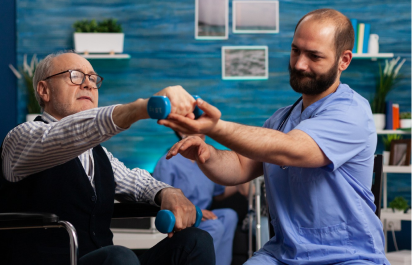
Recovery does not end at hospital discharge. In fact, the most critical phase begins at home—where mobility, strength, and confidence must be rebuilt in real-world settings. Guardian Crest Care delivers rehabilitation therapy through a coordinated clinical model. Our physiotherapists design structured recovery programs based on functional goals—restoring mobility, improving balance, enhancing endurance, and preventing re-injury. Registered nurses monitor clinical parameters, while caregivers reinforce prescribed routines daily to maintain continuity.

This is not casual exercise guidance. It is disciplined, outcome-driven rehabilitation delivered in the patient’s own environment.

What Makes Our Rehabilitation Approach Effective

Evidence-Based Therapy Plans

Programs are tailored to post-surgical recovery, stroke rehabilitation, orthopedic injuries, or general deconditioning.

Integrated Clinical Supervision

Physiotherapists design, nurses monitor, caregivers reinforce. This synergy accelerates recovery while maintaining safety.

Functional Focus

Therapy is aligned with real-life tasks—walking safely indoors, climbing stairs, transferring independently—rather than abstract metrics.

Continuous Monitoring

Progress is tracked and adjusted systematically to avoid stagnation or regression.

rehabilitation therapy

When to Initiate Rehabilitation Support

  • After surgery or hospital discharge
  • Post-stroke or neurological events
  • Following fractures or orthopedic procedures
  • Noticeable muscle weakness or reduced stamina
  • Fear of falling limiting daily movement

Delaying rehabilitation reduces recovery potential. Early, structured intervention improves long- term outcomes and restores confidence faster.

At Guardian Crest Care, rehabilitation is not simply about regaining movement—it is about restoring independence with professional precision.
Scroll to Top

Rehabilitation Therapy

Rehabilitation Therapy

Recovery does not end at hospital discharge. In fact, the most critical phase begins at home—where mobility, strength, and confidence must be rebuilt in real-world settings. Guardian Crest Care delivers rehabilitation therapy through a coordinated clinical model. Our physiotherapists design structured recovery programs based on functional goals—restoring mobility, improving balance, enhancing endurance, and preventing re-injury. Registered nurses monitor clinical parameters, while caregivers reinforce prescribed routines daily to maintain continuity.

This is not casual exercise guidance. It is disciplined, outcome-driven rehabilitation delivered in the patient’s own environment.

What Makes Our Rehabilitation Approach Effective

Evidence-Based Therapy Plans

Programs are tailored to post-surgical recovery, stroke rehabilitation, orthopedic injuries, or general deconditioning.

Integrated Clinical Supervision

Physiotherapists design, nurses monitor, caregivers reinforce. This synergy accelerates recovery while maintaining safety.

Functional Focus

Therapy is aligned with real-life tasks—walking safely indoors, climbing stairs, transferring independently—rather than abstract metrics.

Continuous Monitoring

Progress is tracked and adjusted systematically to avoid stagnation or regression.

rehabilitation therapy

When to Initiate Rehabilitation Support

  • After surgery or hospital discharge
  • Post-stroke or neurological events
  • Following fractures or orthopedic procedures
  • Noticeable muscle weakness or reduced stamina
  • Fear of falling limiting daily movement

Delaying rehabilitation reduces recovery potential. Early, structured intervention improves long- term outcomes and restores confidence faster.

At Guardian Crest Care, rehabilitation is not simply about regaining movement—it is about restoring independence with professional precision.